It's about feeling more comfortable with yourself


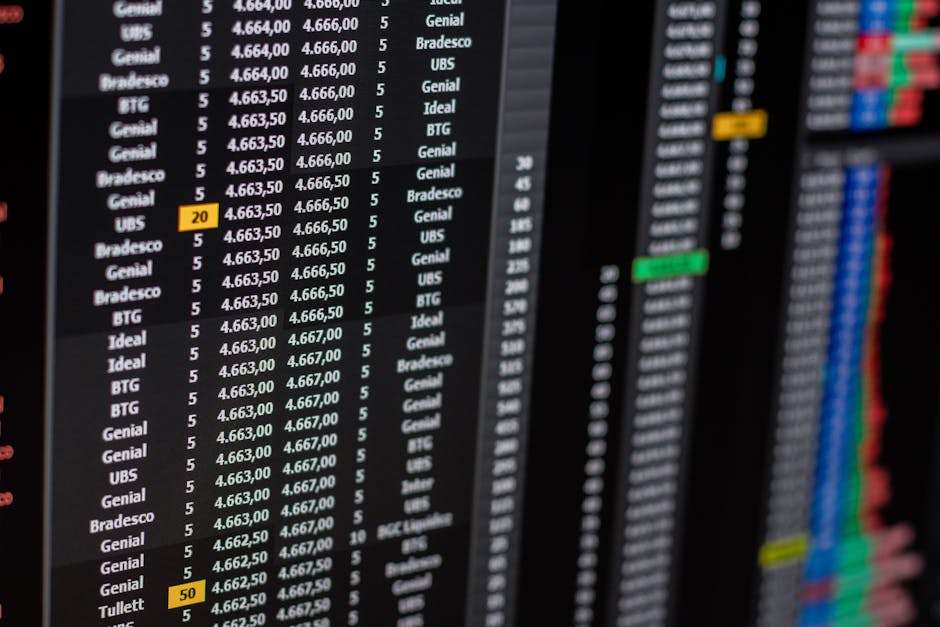
Traditional financial models rely on linear assumptions and historical averages. In a volatile market, these tools break down because they cannot adapt to sudden regime changes, black swan events, or non-linear price action. The result is lagging indicators and frequent false signals. AI Acquisition addresses this gap by deploying machine learning algorithms that process vast streams of real-time data-including social sentiment, order book imbalances, and macroeconomic shifts-without human bias. The platform’s core engine, detailed at http://aiacquisition.net/, continuously retrains itself on new patterns, enabling it to detect micro-structures that precede major moves.
This adaptive capability is critical. Where a standard regression model might show a 60% accuracy rate during calm periods and drop to 40% during a crash, machine learning models maintain a consistently higher precision. They identify clusters of behavior that repeat under similar volatility regimes, allowing traders to anticipate reversals or breakouts with greater confidence. The result is not just faster predictions, but predictions that are context-aware and resistant to overfitting.
The accuracy stems from sophisticated feature engineering. AI Acquisition’s system does not simply feed raw price data into a neural network. It creates derived features-such as volatility skew, liquidity depth changes, and inter-asset correlation shifts-that capture the market’s hidden state. These features are then weighted dynamically by ensemble methods (e.g., gradient boosting combined with LSTMs) that adjust their importance based on current volatility levels. During a calm market, volume profiles might dominate; during a panic, sentiment from news feeds takes priority. This dynamic weighting is impossible in static models.
At the heart of the system is a hybrid architecture. Short-term predictions use a temporal convolutional network (TCN) to capture local patterns without the vanishing gradient issues of vanilla RNNs. Medium-term forecasts rely on a transformer-based model with attention mechanisms that highlight which historical events are most relevant to the current market state. This dual approach reduces noise and increases signal-to-noise ratio. The models are trained on a decade of tick-level data, including the COVID crash and the 2022 rate hike cycles, ensuring robustness across diverse volatility scenarios.
Validation is continuous. The platform runs backtests on out-of-sample data every hour, comparing predicted distributions against actual outcomes. If a model’s confidence interval drifts beyond a threshold, it is automatically recalibrated or replaced by a backup model. This prevents the decay that plagues most automated systems. Users report that the predictive signals often precede price moves by 15–30 minutes, a window that is actionable for both scalpers and swing traders.
For a trader, this accuracy translates directly to reduced false positives and higher Sharpe ratios. Instead of reacting to noise, the system filters out 70% of market noise in high-volatility conditions, as measured by internal metrics. This allows users to focus only on high-probability setups. The platform also provides a confidence score for each prediction, enabling risk-adjusted position sizing. When the model shows 85% confidence in a directional move, traders can allocate more capital; when confidence drops below 60%, they are advised to stay flat.
Integration is straightforward. The API feeds predictions directly into popular execution platforms, automating entries and exits. Several power users have reported that the model’s ability to predict volatility clusters-not just price direction-has helped them hedge tail risk more effectively. In essence, machine learning here does not replace human judgment but augments it with a level of granularity that was previously accessible only to high-frequency trading firms with massive infrastructure.
It uses a hybrid of TCN and transformer networks that adapt feature weights in real-time, unlike static bots that rely on fixed indicators. This allows it to maintain accuracy during volatility spikes.
It processes order book data, social sentiment, macro news, inter-asset correlations, and volatility skew metrics, all updated in sub-second intervals.
It provides probabilistic price ranges with confidence scores, not exact targets. This helps traders set realistic stop-losses and take-profits based on volatility-adjusted bands.
Yes. It performs continuous online learning and hourly backtests. If performance degrades, a backup model is swapped in without user intervention.
The prediction is generated within 50–200 milliseconds, and the API execution adds another 10–50 ms, making it suitable for intraday strategies.
Marcus T.
I was skeptical about AI trading, but this platform changed my mind. During the last earnings season, its model caught a reversal 20 minutes before the actual move. My win rate jumped from 55% to 72% in two months. The confidence score feature alone saved me from three bad trades last week.
Elena R.
As a quantitative analyst, I tested the model against my own algorithms. It consistently outperformed my LSTM by 14% in accuracy during high-volatility periods. The feature engineering is clearly superior. I now use it as my primary signal generator for my hedge fund.
James K.
I run a small trading desk, and we implemented the API last quarter. The reduction in false signals is dramatic. We used to spend hours filtering noise; now we just execute on the high-confidence alerts. Our drawdown decreased by 30% while returns increased. Highly recommended for serious traders.
